Xiamen: China's Stone and Granite Hub — An Import Guide for Saudi Arabia
Dec 12, 2025
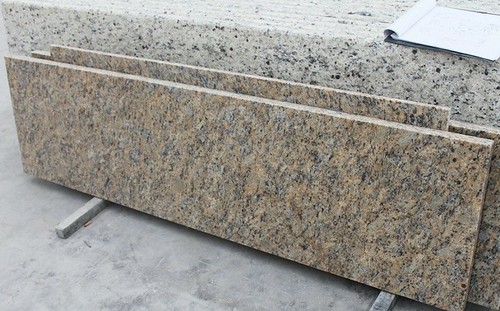
With Saudi Arabia's construction boom — from giga-projects to millions of homes and villas — natural and engineered stone remains indispensable: flooring, facades, kitchens, staircases. The city that dominates today's global stone trade is Xiamen, on the coast of Fujian province in southeast China. Xiamen and its hinterland (especially Shuitou town under Nan'an) form the world's largest center for stone cutting, processing, and export, with hundreds of factories importing raw blocks from every continent and re-exporting them as precisely finished slabs and tiles at prices few can match.
Why Xiamen Rather than the Quarries Themselves
The paradox is that Xiamen's power lies not mainly in local quarries but in being the world's most efficient processing hub: Brazilian and Indian granite blocks and Turkish and Italian marble arrive raw, get cut on modern lines at low operating cost, and leave with high-grade finishing. In Xiamen you therefore find a complete global assortment in one place — a huge time saving for anyone specifying several stone types for a project. The Xiamen International Stone Fair, held annually around March, is the world's largest stone exhibition and an ideal starting point for new buyers.
What to Buy from Xiamen
- Granite: slabs and tiles for floors, facades, and stairs, including budget Chinese varieties (like the famous grey G603) starting at approximately SAR 60–120 (USD 16–32) per square meter for finished tiles depending on thickness and finish.
- Marble: imported and processed, sometimes at better prices than its countries of origin, approximately SAR 120–400 per meter by type.
- Engineered quartz: kitchen countertops in 20 mm and 30 mm — one of the fastest-growing categories.
- Finished products: complete staircases, stone basins, columns and decorative elements, landscape stones.
- Terrazzo and composite tiles for commercial projects.
Buying Intelligently: Specification Before Price
Stone is a naturally variable product, so correct buying starts with a precise written specification: thickness (15/18/20/30 mm), finish (polished, honed, bush-hammered, flamed for exterior floors), an approved color range anchored to a signed control sample, acceptable variation tolerance, and cutting standards for dimensions and angles. Always establish a signed reference slab and photograph it in natural light — batch-to-batch color variation is the number-one dispute in the stone trade. The practical MOQ is one container (approximately 250–300 square meters of 18 mm tile in a 20-foot box, because weight maxes out first).
Shipping and Weight: A Different Calculation from Any Other Cargo
Stone ships by weight, not volume: a 20-foot container hits its weight limit (approximately 26–27 tons) long before it fills up, and packing in properly angled wooden bundles is critical to prevent breakage. Sea freight from Xiamen port to Jeddah Islamic Port or King Abdulaziz Port in Dammam takes approximately 20–30 days. Inspect immediately on arrival and document any breakage with photos before signing — breakage claims after the cargo leaves the port are nearly impossible. Customs duty is approximately 5% depending on classification, plus 15% VAT; check building-material conformity requirements and SABER registration according to your product's category.
Quality: Pre-Loading Inspection Is Non-Negotiable
Before loading, verify: color match against the control sample, dimensional and angular accuracy, polish quality (gloss measured with a simple meter), hairline cracks that reveal themselves when wetted or lit from the side, and packing quality. For exterior granite, ask about water absorption; for fragile marble varieties, about resin treatment and fiberglass mesh backing.
The golden rule of the stone trade: never buy a color from photographs. Natural stone changes from block to block, and the signed control sample is your real contract before any invoice.
Common Mistakes
- Buying thinner material than the engineering spec to save cost, only to have the consultant reject the delivery.
- Forgetting wastage (approximately 5–10% for breakage and cutting) when calculating quantities.
- Weak packing that turns a container's profit into rubble.
- Ignoring project scheduling — a late stone container can idle an entire site.
If you are a contractor or building-material trader who wants precisely specified stone at source prices, Terrace International serves you on the ground: our field team based in Guangzhou and Shenzhen covers Xiamen's factories and region, from factory selection and sample approval to pre-loading inspection and heavy-cargo shipping management to your port of arrival. Get in touch and secure the stone for your next project without surprises.