Importing 3D Printers and Consumables from China to Saudi Arabia
Jun 26, 2026
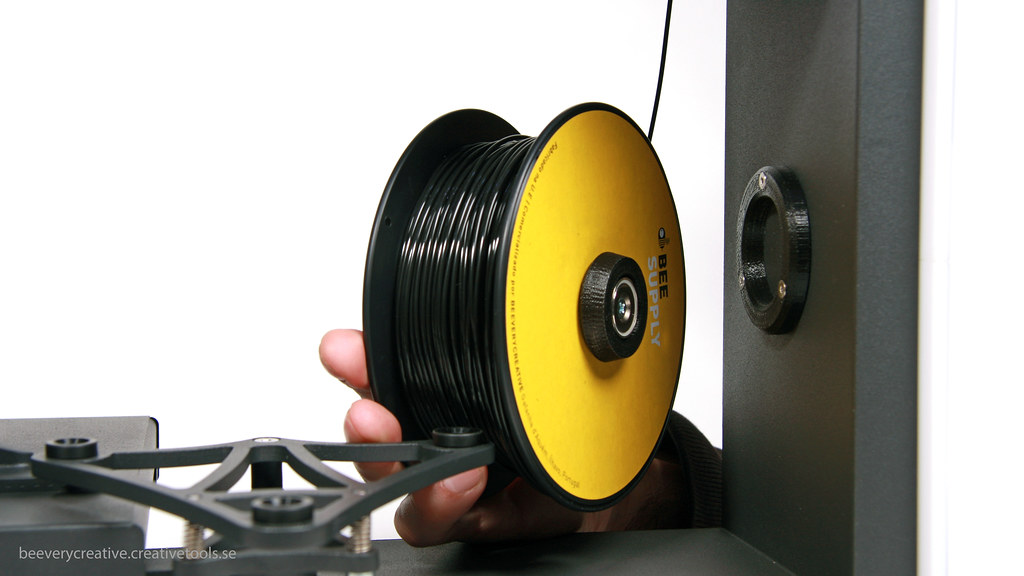
3D printing in Saudi Arabia has moved well beyond the hobbyist niche. Schools and universities are adding maker labs, engineering firms prototype in-house, dental and jewelry workshops adopt resin printing, and a wave of small businesses sells custom parts and personalized products. Vision 2030's push for local industry and digital manufacturing keeps feeding this demand, yet the number of specialized importers remains small. That gap is a genuine opportunity for a trader who imports from the right factories with tightly controlled specifications, because in this category reputation is built on reliability, not on having the lowest price on the shelf.
Why China for This Category
China manufactures the overwhelming majority of desktop 3D printers sold worldwide, and the industry is heavily concentrated in Shenzhen, home to the factories behind most FDM and resin machines along with a complete supporting ecosystem of control-board makers, stepper-motor suppliers, and hotend specialists. Nearby Dongguan handles metal frames and precision tooling, while filament production for PLA, PETG, ABS, and TPU clusters around Shenzhen, Suzhou, and Shanghai. This density means competitive pricing, fast engineering changes, and OEM flexibility you simply will not find elsewhere: many factories will brand machines with your logo, load Arabic-language firmware menus, and adjust packaging for Gulf retail at reasonable minimums.
Where to Source and How to Verify
Alibaba and Global Sources are fine starting points, but treat them as a directory, not a filter. The real screening happens at the factory: verify that the supplier actually manufactures rather than trades, ask for per-unit calibration reports, and check whether they run burn-in testing before packing. The Canton Fair in Guangzhou and Shenzhen's electronics fairs are excellent for meeting manufacturers face to face. Always order a fully assembled sample and test it for at least two weeks: first-layer quality, heated-bed temperature stability, dimensional accuracy on a calibration cube, and noise levels. A serious factory answers technical questions in detail; a reseller goes quiet.
The Most Common Quality Pitfalls
- Cheap control boards without thermal-runaway protection, a genuine fire hazard on budget machines.
- Poorly calibrated rails and motors that produce ringing, layer shifts, and dimensional drift.
- Filament with inconsistent diameter, where tolerance should stay within approximately ±0.02 mm, or spools shipped damp without vacuum sealing and desiccant.
- Power supplies not rated for Saudi Arabia's 220V/60Hz supply, or shipped with the wrong plug type.
- Weak export packaging that lets glass beds and frames crack during 20-plus days at sea.
Certifications and Customs Notes
A 3D printer is an electrical appliance, so it must be registered on the SABER platform with a certificate of conformity under the applicable SASO technical regulations for electrical devices, covering electrical safety, labeling with voltage and frequency, and the correct plug. Ask the factory for test reports from recognized laboratories before you commit, and confirm the rating label and manual are compliant. Filament and resin consumables are simpler on the regulatory side, but if you target the education market, document that materials are free of restricted substances. At customs, expect a duty of approximately 5% on most machines plus 15% VAT calculated on the CIF value, and keep commercial invoices, packing lists, and certificates consistent to avoid clearance delays at Jeddah Islamic Port or King Abdulaziz Port in Dammam.
Costs, MOQs, and Lead Times
Ex-factory prices for desktop FDM printers run roughly USD 90 to 250 per unit depending on build volume and features, resin printers approximately USD 120 to 400, and quality PLA filament about USD 6 to 12 per kilogram at wholesale volumes. Typical MOQs are 50 to 100 units for standard models, though many factories accept a 20-unit trial order at a slightly higher unit price, and filament MOQs commonly start around 500 kg per color mix. Production lead time is usually 15 to 30 days, then sea freight from Shenzhen or Guangzhou to Jeddah takes approximately 18 to 30 days. Build your landed cost from the full chain — product, inland haulage, freight, insurance, duty, VAT, and clearance — before you set retail pricing, because margin in this category comes from bundles of printers plus consumables, not the machine alone.
Common Mistakes Importers Make
The costliest errors: importing obscure models with no spare-parts pipeline, ignoring after-sales support that Saudi buyers absolutely expect, skipping Arabic manuals and interface localization, air-freighting bulk orders and destroying the margin, and paying the final balance without inspecting a random sample of units at the factory. Any one of these can turn a promising container into a warehouse of returns.
The golden rule: never import a printer you cannot support with spare parts — a five-dollar hotend can decide the reputation of your entire brand.
At Terrace International, our field team in Guangzhou and Shenzhen vets 3D printer factories in person, negotiates your terms, runs pre-shipment quality inspections, and manages SASO and SABER compliance through to arrival at Jeddah. Get in touch and launch your digital-manufacturing line with confidence.
Related Articles
Product Import Guides
Importing Tablets and E-Readers from China to Saudi Arabia
Jul 16, 2026
Product Import Guides
Importing Car Dash Cams and In-Car Electronics from China to Saudi Arabia
Jul 14, 2026
Product Import Guides
Importing EV Chargers and Charging Stations from China to Saudi Arabia
Jul 12, 2026