Importing CNC Machines from China to Saudi Arabia
Feb 17, 2026
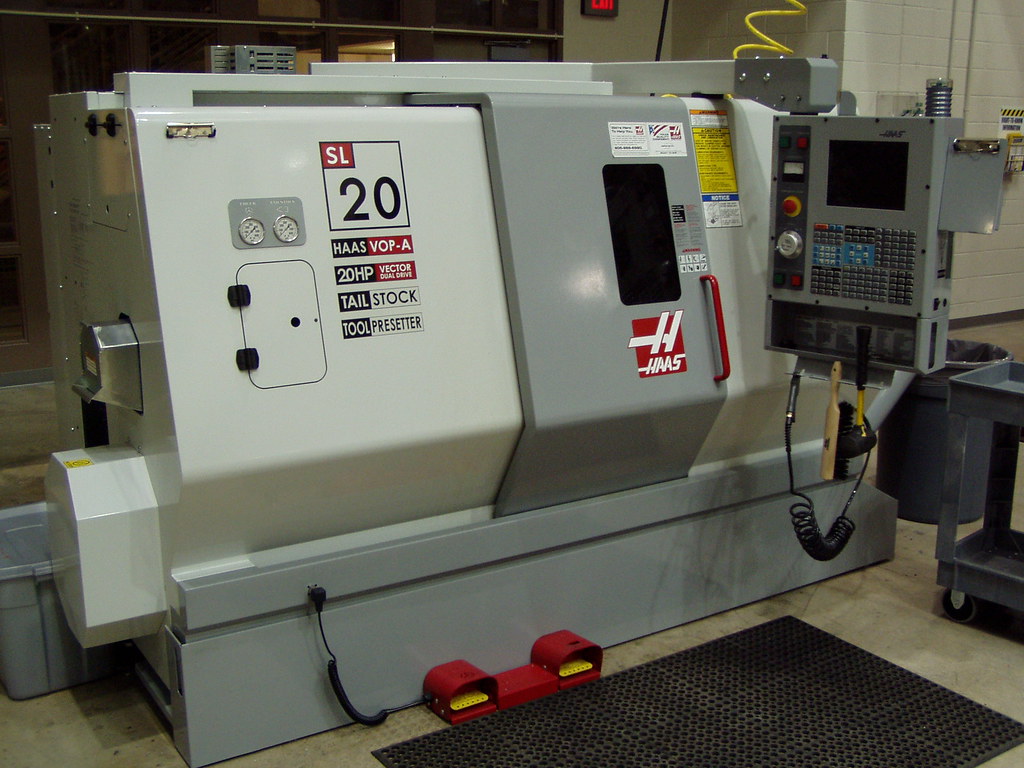
As Saudi Arabia's manufacturing, woodworking, metalworking, and signage sectors expand under Vision 2030, demand for affordable CNC machinery is climbing fast. China builds the widest range of CNC routers, machining centers, laser cutters, and lathes at prices that make it viable for a small workshop to compete. But a CNC machine is a capital investment you will live with for years, so the sourcing rules are different from consumer goods: due diligence, factory acceptance, electrical compatibility, and after-sales support decide whether you win or lose.
Why import CNC machines from China
Chinese CNC builders offer a price-to-capability ratio that is hard to match. A machine that costs a fortune from a European brand can be sourced from China at a fraction of the price with comparable core hardware — often the same imported ball screws, linear guides, and even the same brand-name controllers and spindles. For workshops in Riyadh, Jeddah, and Dammam, this is the difference between buying one machine and building a production line. The key is knowing which factories pair a solid frame with genuine components rather than clones.
Just as important as the machine is the knowledge to run it. A good factory supplies the control software, post-processors, and video or on-site training, and can dial the machine in remotely once it lands. Treat that support package as part of the purchase, because a capable machine with no training and no spare parts stalls a workshop for weeks.
Where to source in China
- Jinan (Shandong) — the recognized capital of CNC routers and laser machines, with hundreds of builders covering woodworking, advertising, and stone routers.
- Tengzhou and Zaozhuang (Shandong) — China's machine-tool base for milling machines, drilling machines, and vertical machining centers (VMCs).
- Foshan and Dongguan (Guangdong) — metalworking CNC, precision machining, and strong component supply.
- Nanjing and the Yangtze delta — higher-end machining centers and precision lathes.
Certifications, standards, and electrical fit
Machinery imports involve safety and compatibility checks that go beyond a certificate on paper:
- CE marking for machinery — the core conformity mark covering guarding, emergency stops, and electrical safety; insist on a real CE technical file, not a sticker.
- SASO / SABER conformity — required for customs clearance at Jeddah or Dammam.
- Electrical compatibility — this is the most overlooked trap. Saudi Arabia runs on 60 Hz, while China builds for 50 Hz; motors and spindles must be specified for 60 Hz, and three-phase machines need the correct 380/400V configuration. Confirm this in writing before production.
- Controller authenticity — verify whether the machine uses a genuine controller (Fanuc, Siemens, Syntec, Mitsubishi) or a clone, because it dictates reliability, software, and spare parts for a decade.
- ISO 9001 — a baseline signal of manufacturing quality management.
Common QC pitfalls
With machinery, verification happens before shipment because a fault discovered in Saudi Arabia is enormously expensive to fix:
- Skipping the Factory Acceptance Test (FAT) — always run or commission a FAT: cut a real test part, check tolerances, and confirm accuracy before the machine is crated.
- Spindle and controller substitution — a downgraded spindle or clone controller swapped in after the quote; confirm serial numbers and brands on the actual unit.
- Frame rigidity and backlash — light frames and worn screws cause vibration and inaccuracy; check ball screws versus lead screws and measure backlash.
- Missing spare parts and manuals — order a spare-parts kit and English documentation up front.
- Weak after-sales — confirm remote support, warranty terms, and parts availability before you pay.
Cost, shipping, and installation
CNC machines are typically bought one unit at a time, with prices ranging from roughly SAR 12,000 for an entry router to SAR 200,000+ for a full machining center. These are heavy, high-value goods, so budget for sturdy export crating, forklift or crane handling, marine insurance, and full-container or breakbulk shipping to Jeddah or Dammam. Plan 8-14 weeks including production, FAT, sea transit, and SABER clearance, and arrange installation, commissioning, and operator training on arrival.
Structure payment to protect yourself — a deposit, a balance milestone tied to a passed FAT, and a retention paid after successful commissioning — and add customs duty and 15% VAT to your landed-cost calculation. The most expensive mistakes are wiring the machine for the wrong frequency, skipping the FAT, and buying from a trader who cannot support the machine after the sale.
Terrace International's engineers in China vet CNC factories, verify controllers and 60 Hz electrical specs, and attend factory acceptance tests before your machine ships to the Kingdom. Talk to us and invest in CNC machinery that arrives ready to produce.
Related Articles

Product Import Guides
Importing Tablets and E-Readers from China to Saudi Arabia
Jul 16, 2026
Product Import Guides
Importing Car Dash Cams and In-Car Electronics from China to Saudi Arabia
Jul 14, 2026
Product Import Guides
Importing EV Chargers and Charging Stations from China to Saudi Arabia
Jul 12, 2026