Importing Commercial & Restaurant Kitchen Equipment from China
Jun 09, 2026
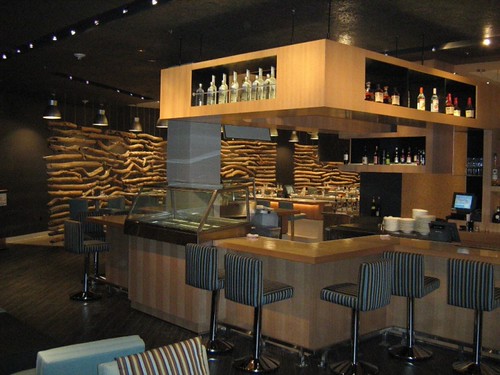
The restaurant and cafe boom in Saudi Arabia has created huge demand for commercial kitchen equipment, from ovens and grills to fridges, chillers and extraction hoods. Importing directly from China cuts cost dramatically versus a local distributor, but commercial kitchen gear has specific details in stainless steel, gas and electrics you must master before any order. The wrong steel grade, gas configuration or voltage turns a cost saving into a kitchen full of equipment that rusts, runs unsafely or simply does not switch on.
Why source kitchen equipment from China?
China manufactures the full spectrum of commercial kitchen equipment at multiple quality tiers, from economy to NSF and European CE compliant. You can outfit an entire restaurant kitchen from almost a single supplier: gas ranges, combi ovens, fryers, grills, stainless prep tables, display fridges, cold rooms, dishwashers and extraction hoods. That breadth is hard to match locally at the same price, and ordering a coordinated set from one cluster keeps voltages, finishes and spare-part standards consistent across your whole kitchen.
Where to source inside China
- Guangdong (Guangzhou, Foshan): the largest cluster for commercial kitchen equipment and stainless steel, with huge specialised markets for restaurant and hotel outfitting.
- Zhejiang (Yongkang and Ningbo): strong in cooking equipment, ranges and utensils.
- Shandong: specialised in commercial refrigeration and cold rooms.
Visiting a specialised market in Guangzhou lets you compare dozens of factories face to face, far better than blind online ordering.
Product details: stainless steel, gas and electrics
This is where a unit that lasts diverges from one that fails within months:
- Stainless steel grade: insist on food-grade 304, not the cheaper 201 that rusts due to salt, heat and humidity. Verify the gauge (thickness), as some factories use very thin sheets.
- Gas type: Saudi Arabia uses LPG. Make sure jets and regulators are configured for LPG, not natural gas, otherwise performance and flame will be wrong and dangerous.
- Electrics: 220V / 60Hz for small appliances and 380V three-phase for big ovens and dishwashers, with a UK/Gulf plug.
Compliance and certificates
Kitchen equipment falls under the SABER platform and needs a product certificate and a shipment certificate. Gas appliances must meet gas safety requirements, electrical appliances meet SASO electrical safety, and food-contact equipment ideally carries a food-grade certificate. Secure these documents from the factory before shipping to avoid the consignment being held at customs.
Hoods and extraction systems usually need to be designed to your kitchen layout. Don't order them in a standard size without a drawing, or they won't meet Civil Defence requirements.
QC inspection points
- Weld and edge quality: smooth welds with no gaps that trap residue, and non-sharp edges.
- Live operation test: ignite burners, heat ovens to maximum temperature, and run fridge compressors.
- Gas leak test with soapy water on the joints.
- Fridge and cold-room insulation: foam thickness and efficiency are critical in Saudi heat.
- Packaging: corner protection and foam to guard stainless from scratches and dents in transit.
Shipping, MOQs and costs
Kitchen equipment is bulky and ships by sea via Jeddah and Dammam. Outfitting one restaurant may fill a 20 or 40-foot container with a mix of equipment (MOQ is flexible on mixed orders). For distributors, the minimum per model often starts at 5 to 20 pieces. Account for knock-down cold rooms that require on-site assembly and a refrigeration technician to charge the gas. As a rough guide, a six-burner gas range with oven lands at a few thousand SAR FOB, a commercial combi oven in the low tens of thousands, and a full small-restaurant fit-out commonly runs 80,000 to 200,000 SAR depending on the brand tier. Add 5% customs duty, SABER fees and 15% VAT, and budget for a stock of thermostats, gas valves, door gaskets and compressor relays as service spares.
Common mistakes
- Choosing cheap 201 stainless that rusts fast in the kitchen.
- Ordering gas units set for natural gas instead of LPG.
- Ignoring hood drawings and Civil Defence requirements.
- Not securing compressor and regulator spares for service.
How Terrace International helps
Our Guangzhou team visits kitchen-equipment markets and factories, verifies the stainless grade and gauge, confirms appliances are configured for LPG and Gulf electrics, supervises operation tests and packaging before shipment, and handles SABER certification all the way to your container's arrival. Talk to us to outfit your commercial kitchen with confidence.
Related Articles
Product Import Guides
Importing Tablets and E-Readers from China to Saudi Arabia
Jul 16, 2026
Product Import Guides
Importing Car Dash Cams and In-Car Electronics from China to Saudi Arabia
Jul 14, 2026
Product Import Guides
Importing EV Chargers and Charging Stations from China to Saudi Arabia
Jul 12, 2026