Importing Packaging & Printing Materials from China
May 14, 2026
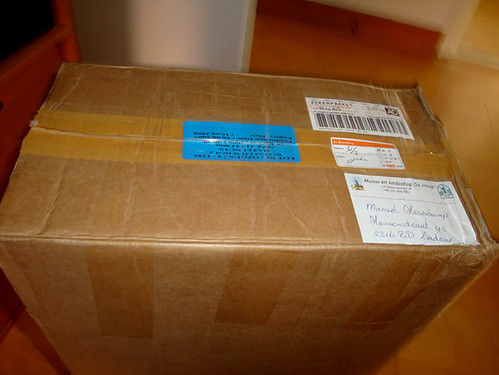
As local brands and e-commerce grow across Saudi Arabia, packaging and printing materials have become essential to any product, not a luxury. Good packaging raises your product's perceived value, protects it in transit, and shapes your customer's first impression. China is the world's leading source for every kind of packaging — from cartons and bags to luxury boxes and labels — at unbeatable prices and variety.
Why China for Packaging
China combines low production cost with advanced printing capability and premium finishing options (lamination, UV coating, embossing, gold foil, soft-touch finish). This lets even small brands access packaging at the level of major labels. The material range is vast: paper, corrugated board, plastic, glass, metal and non-woven fabrics, making it a single destination for all your needs. Equally important, Chinese factories handle custom design and short runs that local printers often refuse, so you can launch a branded box, a printed mailer bag, and a label set from one coordinated source rather than chasing several local suppliers.
Where Exactly to Source in China
Know the specialised cluster for each packaging type to get the best price and quality:
- Guangzhou / Dongguan — a major hub for luxury paper boxes, gift boxes and high-quality printing for cosmetics, electronics and perfumes.
- Wenzhou in Zhejiang — the capital of labels, plastic bags, flexible packaging and stickers.
- Yiwu — packaging bags and accessories in small, varied quantities, ideal for startups.
- Shenzhen — technical and advanced packaging for electronics and smart products.
- Shanghai and Jiangsu — corrugated board and industrial shipping cartons in bulk.
Quality Pitfalls in Packaging & Printing
Mistakes here show immediately and directly affect your brand image in the customer's eyes:
- Color matching: the printed colour may differ from your on-screen design. Always request a physical print proof and use the Pantone system rather than colour descriptions.
- Dimensional accuracy: a box a few millimetres larger or smaller may not fit your product. Send your exact product dimensions and request a physical mock-up before bulk production.
- Material grammage: thinner board than agreed means flimsy packaging that collapses in transit. Specify paper weight in grams, in writing.
- Finishing quality: peeling lamination, weak gluing, uneven gold foil, or skewed cutting.
- Structural strength: a box that looks right but crushes under stacking, or a mailer bag that tears at the seal during last-mile delivery. Test packed weight and drop resistance, not just appearance.
Always approve a signed pre-production sample. Approving the design file alone is not enough — you must see the actually printed product in your hand.
Special Considerations & Compliance
If the packaging contacts food, this is a critical point you must not take lightly:
- Food packaging must be made of food-grade materials with a conformity certificate; this falls under the Saudi Food & Drug Authority (SFDA) requirements.
- Labels and containers must comply with labeling, barcode and mandatory product-data requirements.
- Some plastic packaging materials are subject to environmental requirements and the SABER platform.
Common Mistakes Importers Make
Avoid these costly errors:
- Approving the design file without an actually printed proof.
- Ignoring the Pantone system, so the colour arrives off-brand.
- Not testing the box size against the real product before production.
- Overlooking SFDA requirements on food packaging until the shipment arrives.
Shipping, Costs & MOQ
Packaging is usually light but bulky, so sea freight is charged by volume (CBM) rather than weight. Plan to minimise empty space — flat or foldable packaging saves significant container space and lowers your cost. MOQ typically starts from a few thousand units and rises with special finishes due to mould and plate setup costs, which are usually a one-time charge you recover on repeat orders. Factor 15% VAT, customs, and first-order mould costs into your pricing, and remember that ordering all your packaging lines together in one container is far cheaper than shipping each item separately. Keep a small safety buffer of stock too, since reorders carry the same lead time as the first run and running out of branded packaging can halt your own production.
How Terrace International Helps
Terrace International's team in China deals directly with packaging factories in Guangzhou and Wenzhou, reviews print proofs and colour/size matching before bulk production, and verifies safety standards for food packaging. We protect your brand from costly packaging mistakes that spoil your customer's impression. Talk to Terrace International before your next order.
Related Articles

Product Import Guides
Importing Tablets and E-Readers from China to Saudi Arabia
Jul 16, 2026
Product Import Guides
Importing Car Dash Cams and In-Car Electronics from China to Saudi Arabia
Jul 14, 2026
Product Import Guides
Importing EV Chargers and Charging Stations from China to Saudi Arabia
Jul 12, 2026