Importing Power Strips, Chargers, and Cables from China to Saudi Arabia
Jul 06, 2026
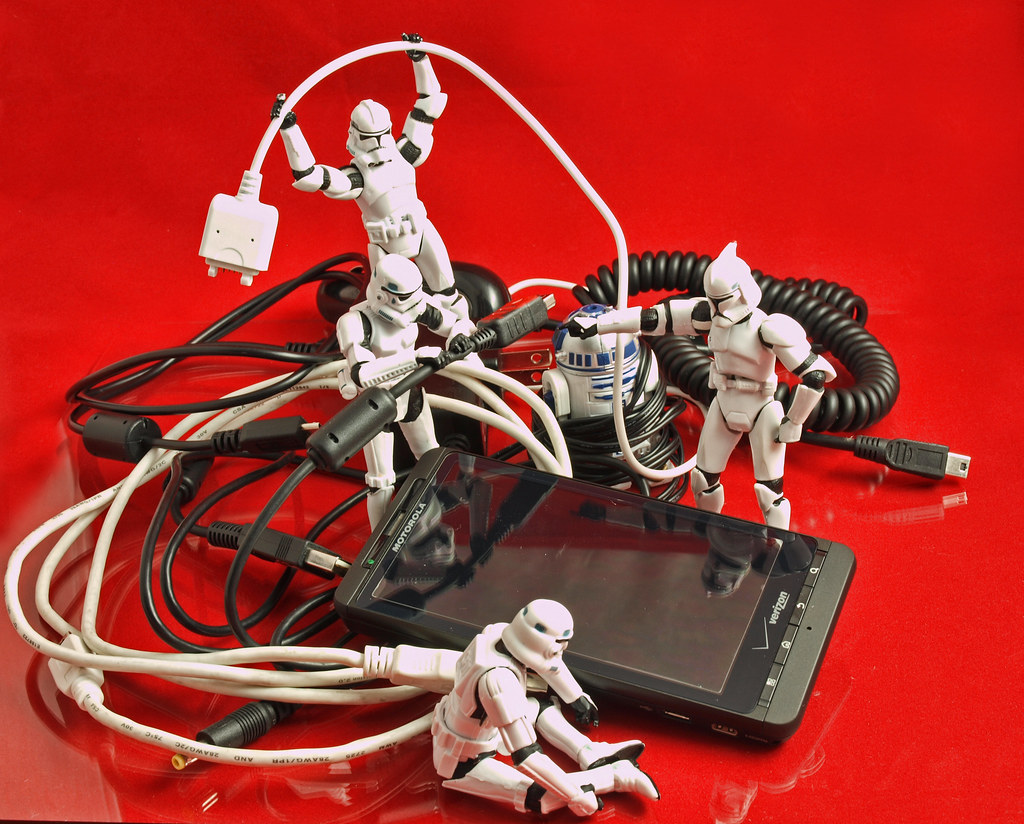
Chargers, cables, and power strips are the daily bread of the market: every home, office, and car needs them, they wear out and get replaced constantly, and retail margins exceed 100% on many lines. At the same time, this is one of the most tightly regulated categories in Saudi Arabia, because these products connect directly to mains power and sit at the heart of household fire safety. The Saudi Standards authority focuses its surveillance on exactly these products, and the market is full of stories of shipments rejected or destroyed for non-conformity. Importers who truly master the requirements find a huge market with less competition than you would expect — because so many others fail at the conformity gate.
The Opportunity, and Why China
China produces the overwhelming majority of the world's phone chargers and cables, and its factories range from cheap workshops producing genuinely dangerous goods to major manufacturers building for the biggest global brands on the same production lines. The difference between the two tiers may be less than a riyal or two per piece, but it is the difference between a product that serves for years and one that melts at the first overload. With the rise of GaN fast chargers, USB-C cables, and high-wattage charging, refreshing your range continuously is now a competitive necessity.
Where They Are Made: The Pearl River Delta
- Shenzhen: the hub for quality chargers, GaN technology, and power banks, especially Bao'an and Longgang districts.
- Dongguan: the largest cluster of cable and connector factories at massive volume.
- Zhongshan and Ningbo: power strips, sockets, and plugs.
Shenzhen's Huaqiangbei market is an excellent starting point for comparing models, but serious buying happens directly at the factory after a site visit that verifies production lines and in-house quality-testing practices.
Saudi Requirements: Where Most Importers Fail
- The Saudi plug: the Saudi standard adopts the British three-pin fused plug (BS 1363). Importing power strips with flat European or Chinese plugs means a rejected shipment.
- SABER is mandatory: product registration, Product Certificate, and Shipment Certificate before clearance, backed by test reports from accepted laboratories against the relevant Saudi and Gulf (GSO) standards.
- Voltage and frequency: 220 V / 60 Hz — confirm internal power electronics are genuinely designed for it.
- Power banks: require UN38.3 battery certification on top of conformity requirements, and air carriers are especially strict about them.
- Labelling: technical markings on product and packaging must follow Saudi requirements; ambiguous labelling alone can stall clearance.
Quality Traps in This Category
- Fake copper: cables using copper-clad aluminium (CCA) instead of pure copper — they heat up and charge slowly.
- Imaginary wattage: a charger labelled 65 W delivering less than half that. Test real output with a USB power meter.
- Decorative fuses and breakers: some cheap power strips fit protection components that do not function at all. Test them physically.
- Flammable plastics: insist on flame-retardant housings rated appropriately for electrical products.
- Non-compliant USB-C ports: off-spec implementations cause compatibility problems with modern devices and drive up returns.
Prices and MOQs
- Standard wall charger: approximately USD 0.8 to 2 (SAR 3–8) ex-factory; a 65 W GaN fast charger runs about USD 4 to 9 (SAR 15–35).
- Good USB-C cable: approximately USD 0.5 to 1.9 (SAR 2–7) depending on materials and wattage rating.
- Saudi-spec power strip: approximately USD 2 to 7 (SAR 8–25) depending on outlets and USB ports.
- 10,000–20,000 mAh power bank: approximately USD 5 to 15 (SAR 18–55).
- MOQ: usually 500 to 2,000 pieces per model given the low unit price, with more flexibility on ready-made designs.
Customs duty is around 5% and VAT is 15%; sea freight through Jeddah Islamic Port or King Abdulaziz Port in Dammam takes approximately 18 to 30 days.
Expensive Mistakes
Importing non-Saudi plugs; buying from middlemen at factory prices with unknown quality; skipping real output testing; slipping power banks into a general shipment without battery documentation; and building a brand on a poor product, so trust collapses with the first wave of failures. In a category this price-sensitive, reputation is the only durable moat.
Golden rule: for anything that plugs into the wall, a genuine conformity certificate is not an extra cost — it is your licence to stay in the market.
The Terrace International team in Guangzhou and Shenzhen works with this category's factories and SASO's fine print every week: we select the factory, negotiate, supervise testing and pre-shipment inspection, and run SABER and clearance end to end. Contact us to build an electrical-accessories line that opens wholesale doors with confidence.
Related Articles
Product Import Guides
Importing Tablets and E-Readers from China to Saudi Arabia
Jul 16, 2026
Product Import Guides
Importing Car Dash Cams and In-Car Electronics from China to Saudi Arabia
Jul 14, 2026
Product Import Guides
Importing EV Chargers and Charging Stations from China to Saudi Arabia
Jul 12, 2026