Importing Queue Management Systems and Self-Service Kiosks from China to Saudi Arabia
Apr 13, 2026
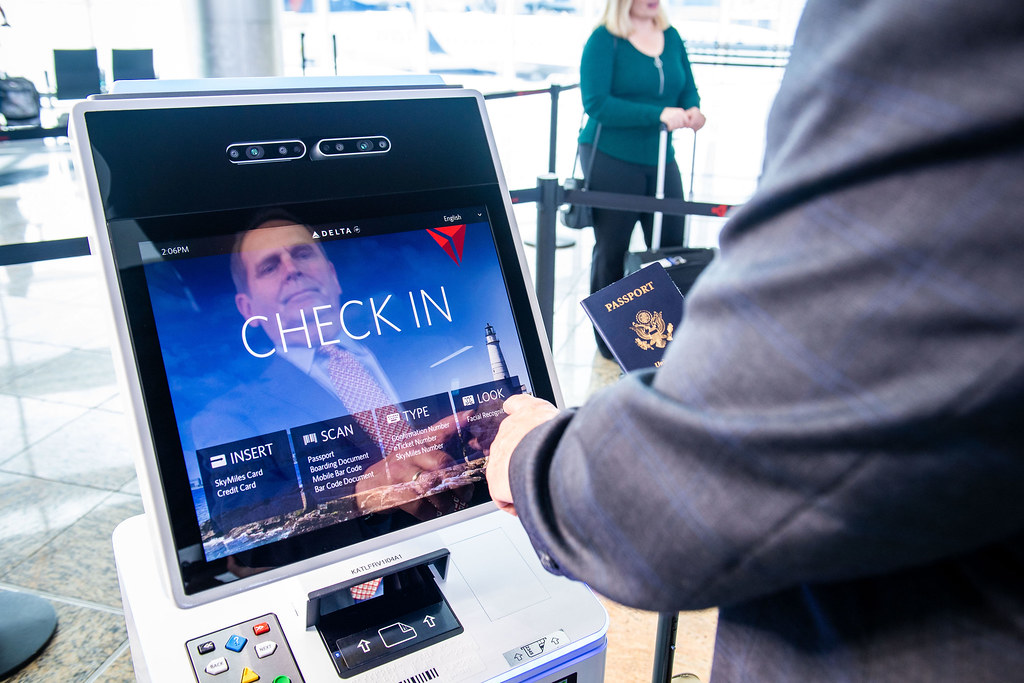
Saudi Arabia's digital transformation has completely reshaped customer service halls: hospitals and clinics, banks, quick-service restaurants, government agencies, and car showrooms are all moving to queue management systems and self-service kiosks. Restaurants alone are riding a huge wave of self-ordering kiosks that raise average order value while relieving cashier pressure. For Saudi technology and systems-integration companies, importing these devices directly from China means double the margin compared with buying from regional distributors — but project success hangs on details many overlook: complete Arabic support, compatibility with Saudi payment methods, and software that can be customised and integrated.
Why China Is the Source for This Category
Self-service kiosks boil down to three components China masters better than anywhere else: industrial touchscreens, embedded computers, and precision sheet-metal enclosures. Shenzhen produces all three within a few kilometres, which makes a kiosk customised to your brand, colour, and dimensions available at low MOQs and at roughly 50% to 70% below equivalent European systems. Serious factories also provide base software — queue engines, self-ordering interfaces — that you can build on or replace with your own stack.
Where They Are Made and How to Choose a Factory
- Shenzhen: the main hub for self-service kiosks, industrial touchscreens, and embedded PCs, particularly Bao'an and Longhua.
- Guangzhou and Dongguan: metal fabrication, powder coating, and assembly of larger kiosk enclosures.
When evaluating, separate three layers: enclosure and metalwork quality; electronic component quality (screen, PC, thermal printer, readers); and software maturity with real APIs. A factory excellent in one layer can be weak in another, and an on-site inspection exposes this quickly.
Saudi Market Requirements That Allow No Compromise
- Arabic first: user interfaces, ticket printing, and calling displays must support Arabic and right-to-left layout correctly, one hundred percent, with clean Arabic fonts — not distorted machine translation.
- Saudi payments: self-ordering kiosks need integration with payment providers operating in Saudi Arabia (mada, card networks, digital wallets), so confirm the kiosk accommodates locally certified payment terminals in terms of mounting space, cabling, and software hooks.
- E-invoicing: POS systems connected to kiosks must align with ZATCA e-invoicing requirements, so raise this with your software provider from day one.
- Approvals: SASO conformity and SABER registration for the electrical devices, plus CST approval for any Wi-Fi, Bluetooth, or cellular module inside the unit.
Pre-Shipment Quality Inspection
- Touchscreen: accurate response to the edges, brightness sufficient for bright lobbies, and an industrial grade rated for thousands of touches daily.
- Thermal printer: test print speed, auto-cutter operation, and paper replacement ergonomics — the printer is the most failure-prone component in queue systems.
- Cooling and ventilation: the device will run 12 hours a day in warm environments; inspect fans, airflow paths, and power supply quality.
- Enclosure: metal thickness, coating quality, and rust resistance, especially for units near entrances.
- Continuous run test: require the sample to run 72 hours non-stop before approving production.
Prices, MOQs, and Shipping
- Touchscreen ticket dispenser: approximately SAR 2,000 to 6,000 depending on size and specification.
- Self-ordering kiosk, 21 to 32 inch, with printer and payment mount: roughly SAR 4,000 to 12,000.
- Calling and signage displays: approximately SAR 800 to 2,500 per unit.
- MOQ: typically 5 to 20 units, with full enclosure and colour customisation available from relatively small quantities.
- Units usually ship by sea in approximately 18 to 30 days to Jeddah Islamic Port or Dammam, with customs duty around 5% plus 15% VAT; wooden crating is essential for the screens.
Common Mistakes in This Category
The most frequent: buying devices with English-only interfaces and discovering weak Arabic support in the software; overlooking local payment terminal compatibility, which turns a self-ordering kiosk into a mere display screen; failing to agree software rights, updates, and SDK access in writing; skipping spare parts (printers, screens, power supplies); and signing a large project without first field-testing two units at a real customer site.
Golden rule: in self-service hardware, the software, Arabic support, and local payment integration are the real product — the metal is just the box that carries them. Evaluate the factory on the former before the latter.
Terrace International's field team in Shenzhen and Guangzhou tests kiosks and queue systems inside their factories, verifies Arabic support and the actual components used, and manages negotiation, inspection, shipping, and clearance until you receive units ready to deploy. Contact us to enter the Saudi self-service market with a product you can stand behind from the first project.
Related Articles
Product Import Guides
Importing Tablets and E-Readers from China to Saudi Arabia
Jul 16, 2026
Product Import Guides
Importing Car Dash Cams and In-Car Electronics from China to Saudi Arabia
Jul 14, 2026
Product Import Guides
Importing EV Chargers and Charging Stations from China to Saudi Arabia
Jul 12, 2026