Importing Smart Home & IoT Devices from China
May 25, 2026
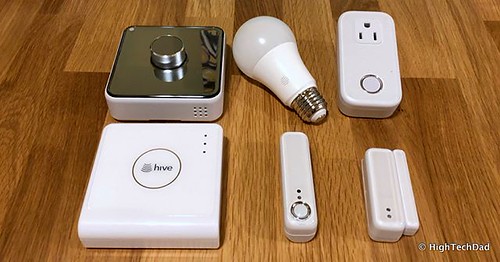
The smart home is no longer a luxury but a fast-accelerating trend in Saudi Arabia and the Gulf, driven by modern housing projects and the high tech awareness of young consumers. From smart lighting and cameras to locks, robot vacuums, and thermostats, the market is growing rapidly. China — specifically Shenzhen — is the heart of the global IoT industry. But this category is technical and precise, and failure in it is usually not in the device but in the software and compatibility. Here is the practical guide.
Where to source smart home devices in China
The concentration here is very clear compared to other categories:
- Shenzhen, Guangdong: The undisputed global capital of electronics and IoT. Home to a complete supply chain from chips to finished product, and the famous Huaqiangbei electronics market. Here you find cameras, smart locks, sensors, and Wi-Fi modules.
- Dongguan and Guangzhou: For high-volume manufacturing, smart appliances, and robot vacuums.
- Hangzhou and Ningbo: Strong in integrated smart home solutions and software platforms.
The real challenge: software and compatibility
The biggest difference between this category and others is that the device is only half the value — the other half is the app and connectivity:
- App compatibility: Confirm the device works with a stable, supported app (such as the common Tuya / Smart Life) or the brand's own app. A bad app means a rejected product no matter how good the hardware.
- Arabic language support: A major selling point in the Gulf market. Ask the supplier explicitly about Arabic interface support.
- Voice assistant compatibility: Integration with Alexa and Google Home raises product value.
- Wi-Fi frequency: Many IoT devices work on 2.4GHz only — confirm compatibility with local networks.
- Cloud server continuity: Verify the supplier won't suddenly shut down its servers, turning the devices into useless bricks.
Electrical and battery safety
Smart home devices face precise electrical requirements:
- Voltage and plug: Must match Saudi standards (220–240V, British type G plug). Request voltage and plug adaptation explicitly.
- Batteries: Devices containing lithium batteries (wireless cameras, locks, sensors) need UN38.3 certification for shipping and IEC 62133 for safety.
- Wireless and emission safety: Verify certifications such as CE / FCC as a reference for wireless design quality.
Certifications and Saudi regulatory requirements
Smart home devices are a regulated category passing through the SABER platform and require a Product Certificate of Conformity and a shipment Certificate of Conformity, with conformity to SASO standards for electrical and electronic devices. Wireless devices may need approval from the Communications, Space & Technology Commission (CST) to authorize radio frequencies, especially cameras and connected devices. Confirm these approvals early, because wireless communication devices follow an additional approval path beyond ordinary electrical devices.
MOQ, shipping, and costs
- MOQ: usually 100–1,000 units depending on complexity; simple devices (bulbs, smart plugs) are lower, complex ones (robot vacuums) higher.
- Smart home devices are light and high-value, so air freight is viable to test the market quickly before committing to a full sea container.
- Electronics are sensitive to humidity and impact — require protective packaging and a functional inspection before shipment.
- Add 15% VAT and customs duty, and plan for technical support and warranty because the tech-savvy customer demands both.
Common mistakes
- Focusing on device specs and neglecting app quality and setup experience — the number-one cause of returns in this category.
- Ignoring voltage and plug adaptation, so devices arrive with Chinese plugs that don't work in Saudi homes.
- Neglecting CST approval for wireless devices and assuming SABER alone is enough.
- Committing to large quantities before testing software and server stability in real-world use.
In smart home, you're selling an experience, not a piece of metal — and the weakest link in the experience (the app, connectivity, language) is what determines your customer's satisfaction.
How Terrace International helps
At Terrace International, our on-the-ground team in Shenzhen and Guangzhou actually tests apps, compatibility, and Arabic support before you commit, verifies voltage and plug adaptation and battery certifications, and manages SABER and CST approvals and shipping to Jeddah and Dammam. We turn the complexity of this technical category into a clear, safe process. Contact Terrace International to enter the fast-growing smart home market with products that actually work and satisfy your customer.
Related Articles
Product Import Guides
Importing Tablets and E-Readers from China to Saudi Arabia
Jul 16, 2026
Product Import Guides
Importing Car Dash Cams and In-Car Electronics from China to Saudi Arabia
Jul 14, 2026
Product Import Guides
Importing EV Chargers and Charging Stations from China to Saudi Arabia
Jul 12, 2026