Importing Supermarket Shelving & Retail Fixtures from China
May 16, 2026
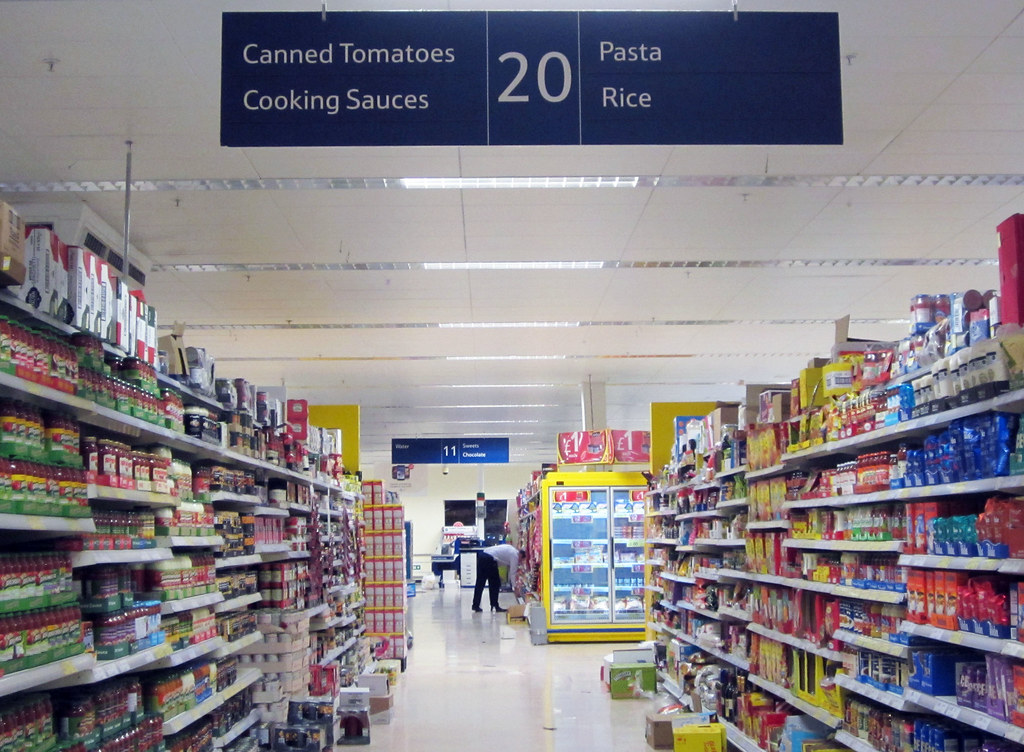
Opening a supermarket, large grocery or retail store in Saudi Arabia requires a big investment in shelving and fixtures. Importing directly from China cuts fit-out cost substantially and allows flexibility in design, colours and sizes. But shelving is an engineering product tied to load-bearing and customer safety, with details you must not take lightly. The gap between a gondola that holds full water cases for years and one that bows and topples is just a fraction of a millimetre of steel you cannot see in a photo.
Why source retail shelving from China?
China is the world's largest producer of retail shelving and offers a full range: wall (gondola) shelving, central island shelving, counter shelving, dump bins, shopping trolleys, vertical and horizontal fridges and freezers, checkout systems and price signage. You can outfit an entire store and colour-match your brand from one factory, which is harder and pricier locally. Many factories also offer end-bay branding panels and custom RAL colours, so the fit-out reinforces your identity rather than looking like a generic warehouse.
Where to source inside China
- Guangdong (Guangzhou, Foshan): the largest cluster for retail shelving, store fixtures and commercial refrigeration.
- Shandong: strong in heavy-duty steel racking and storage systems.
- Jiangsu and Zhejiang: for shopping trolleys and metal accessories.
Visiting a specialised market in Guangzhou lets you inspect steel and coating quality yourself, which is decisive for a durability-driven product.
Product details: steel gauge, coating and load
This is where the hidden differences some factories exploit live:
- Steel gauge (thickness): good shelving uses adequate gauge in uprights and shelves. Cheap factories reduce thickness, so shelves bend under product weight and become a hazard.
- Coating: insist on high-quality powder coating that resists scratches and rust, not a thin spray. In coastal areas (Jeddah, Dammam) salty humidity accelerates rust.
- Load capacity: request the load rating per shelf (kg) and confirm it suits your goods (water, heavy canned items).
- Locking system: ease of adjusting shelf height and lock stability.
Compliance and electrical fixtures
The metal shelving itself isn't subject to electrical compliance, but fridges, freezers, checkout systems and lighting fall under the SABER platform and SASO energy-efficiency and electrical-safety requirements. Commercial fridges are subject to the energy-efficiency regulation, so ensure compliance before shipping.
Shelving is a structural product carrying weight above customers' heads. Saving a few riyals on steel gauge could cost you an accident. Always request the certified load rating.
QC inspection points
- Measure steel gauge physically with a micrometer, don't rely on the seller's promise.
- Load test: load a shelf with the rated weight and watch for bending.
- Coating quality: adhesion and scratch-resistance tests, plus colour consistency across the batch.
- Dimensional consistency: check a random sample's dimensions to ensure parts fit during assembly.
- Packaging: edge and corner protection, since shelving scratches easily in transit.
Shipping, MOQs and costs
Shelving is disassembled and flat-packed to save space, shipping by sea via Jeddah and Dammam. A 40-foot container holds the shelving for a mid-size store. MOQ typically starts at 50 to 100 shelf units for a competitive price, or by the full container. Fridges take more space and need more packaging care. As a rough guide, a double-sided gondola run lands at a low-to-mid hundreds of SAR per metre FOB, a checkout counter in the low thousands, and an open multi-deck display fridge in the mid tens of thousands. A full mid-size supermarket fit-out commonly runs 150,000 to 400,000 SAR. Account for on-site assembly labour, 5% customs duty, SABER fees on refrigeration and 15% VAT, and always order a few percent of spare shelves, brackets and back-panel clips because some always bend or go missing in transit.
Common mistakes
- Chasing price while ignoring steel gauge and load capacity.
- Ordering cheap coating that rusts in coastal areas.
- Not ordering spare parts (shelves, brackets) that may damage in transit.
- Neglecting energy-efficiency compliance for commercial fridges.
How Terrace International helps
Our Guangzhou team visits shelving and retail-fixture factories, measures steel gauge physically, verifies coating quality and load capacity, supervises load tests and flat-pack packaging before shipment, and handles SABER compliance for fridges and checkout systems all the way to your container's arrival. Talk to us to fit out your store with confidence and durability.
Related Articles

Product Import Guides
Importing Tablets and E-Readers from China to Saudi Arabia
Jul 16, 2026
Product Import Guides
Importing Car Dash Cams and In-Car Electronics from China to Saudi Arabia
Jul 14, 2026
Product Import Guides
Importing EV Chargers and Charging Stations from China to Saudi Arabia
Jul 12, 2026