During-Production Inspections (DUPRO): Catching Quality Problems While You Can Still Fix Them
Nov 04, 2025
A scenario that repeats endlessly: an importer waits until production is complete, books the final inspection, and the inspector discovers that 30% of the quantity carries a fundamental color or sizing defect. Every option now is painful — re-production that delays the season by weeks, expensive sorting and rework, or reluctantly accepting defective goods. All of it could have been avoided with one early check during production, known in the quality industry as DUPRO (During Production Inspection). This article explains when this inspection earns its cost many times over, and how to extract maximum value from it.
What Is DUPRO and Where Does It Sit in the QC Chain?
The classic quality chain has four stations: a pre-production inspection (PPI) verifying raw materials and readiness; the during-production inspection (DUPRO) when roughly 20–60% of the quantity is complete; the final pre-shipment inspection (PSI) at 80%+ production and packing; and container loading supervision at departure. DUPRO's distinction is its position in the golden zone: production is advanced enough to judge real quality on actual line output, yet early enough to correct any deviation across the remaining quantity before it exists.
What the Inspector Examines Mid-Production
- Finished units: a random sample checked against the agreed AQL levels and compared with the approved golden sample.
- Raw materials and components in stock: do they match the specification, or have they been quietly substituted with cheaper alternatives? This is one of the most common forms of silent cost-cutting.
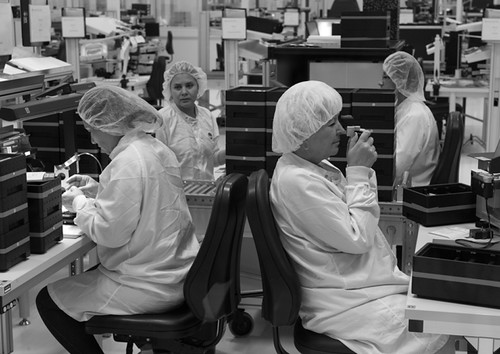
- The production line itself: machine settings, assembly methods, and worker skill at critical stations.
- Actual output rate versus schedule: how many pieces are genuinely finished? Production delays surface here — not two days before shipment.
- Storage conditions for finished goods and preliminary packaging.
The Real Value: Correcting the Uncut Cloth
DUPRO's unique power is that any defect found can be fixed at the root for everything not yet produced: adjusting a machine setting, replacing a material batch, retraining an operator, or tightening internal QC at one station. Even the defective units already made are limited in number and can be sorted or reworked without catastrophe. Compare that with relying on the final inspection alone, when your entire capital has already been converted into finished goods that can only be changed at heavy cost in time and money.
When Does DUPRO Earn Its Cost?
One inspection costs a single inspector man-day — approximately USD 100–300 in major manufacturing hubs like Guangzhou, Shenzhen, and Ningbo. Not every shipment needs it, but it approaches mandatory in these cases:
- Large orders — a full container or more, where the cost of failure exceeds the inspection fee hundreds of times over.
- First production runs with a new factory whose discipline you have not yet tested.
- Customized OEM products built to your specification and brand: deviations are far more likely than with off-the-shelf goods.
- Complex, multi-component products: appliances, furniture, electrical goods that must also meet SASO/SABER conformity for Saudi clearance.
- Hard seasonal deadlines — Ramadan, back-to-school, winter — where a two-week delay means missing the season entirely.
- Any factory with a previous bad experience on your account.
The golden rule: the cost of a defect multiplies at every stage it survives — a flaw fixed for a hundred dollars during production costs thousands after completion and tens of thousands once the container reaches Jeddah.
How to Set Up a Successful DUPRO
- Time it precisely: require weekly production progress reports from the factory, and book the inspection at 20–40% completion for complex products or 40–60% for simple ones.
- Equip the inspector with a full reference package: the specification file, the golden sample or its approved photographs, the classified defect list, and the AQL levels.
- Demand a photographic report the same day, with a clear verdict: conforming / observations requiring correction / material deviation.
- On any deviation: send the factory a written corrective-action plan with a deadline, tie the next payment installment to closing the findings, and schedule a follow-up check if needed.
A Common Mistake: Treating DUPRO as a Substitute for the Final Inspection
The two inspections complement each other; they do not compete. DUPRO steers production onto the right path, while the final inspection documents the completed shipment's condition before the balance payment and shipment. Skipping either on a large order is false economy — especially since the final inspection result is your contractual instrument for withholding the last payment until problems are corrected.
The Terrace International field team in Guangzhou and Shenzhen keeps your factories under close watch: during-production inspections, same-day photographic reports, and corrective-action plans managed directly with factory management in their own language — all within an end-to-end service from negotiation through to your container's arrival at a Saudi port. Talk to us and make sure production defects are discovered in China, not in your warehouse.