Consolidating Multiple Suppliers into One Container: LCL vs FCL
Jun 03, 2026
Few sourcing strategies save more money than buying from several Chinese factories at once — a little lighting from Zhongshan, some hardware from Foshan, packaging from Guangzhou. The challenge is logistical: how do you turn three, five, or ten separate factory pickups into a single, clean shipment to Jeddah or Dammam? The answer is consolidation, and choosing correctly between LCL and FCL is what decides whether it saves you money or quietly eats your margin.
What consolidation actually means
Consolidation is the practice of bringing goods from multiple suppliers into one warehouse in China, combining them, and shipping them together under a single bill of lading. A consolidation warehouse (often near the port in Guangzhou, Yantian in Shenzhen, or Ningbo) receives each supplier's cartons, inspects and weighs them, re-palletizes if needed, and loads them as one shipment. Instead of paying for several small deliveries and juggling multiple freight bookings, you manage one shipment, one set of documents, and one customs entry in Saudi Arabia.
LCL: when you don't fill a container
LCL (Less than Container Load) means your goods share a container with other importers' cargo. You pay by volume, measured in cubic meters (CBM), with a typical minimum of 1 CBM. LCL is the natural choice when your combined cargo from all suppliers is small — roughly under 15 CBM. Its strengths are obvious: low entry cost, no need to fill a box, and flexibility to test a new product with a small order. Its weaknesses matter too: higher cost per CBM, more handling (and so more risk of damage), slower transit because of deconsolidation at destination, and destination charges at the Saudi port that can surprise first-timers.
FCL: when volume builds up
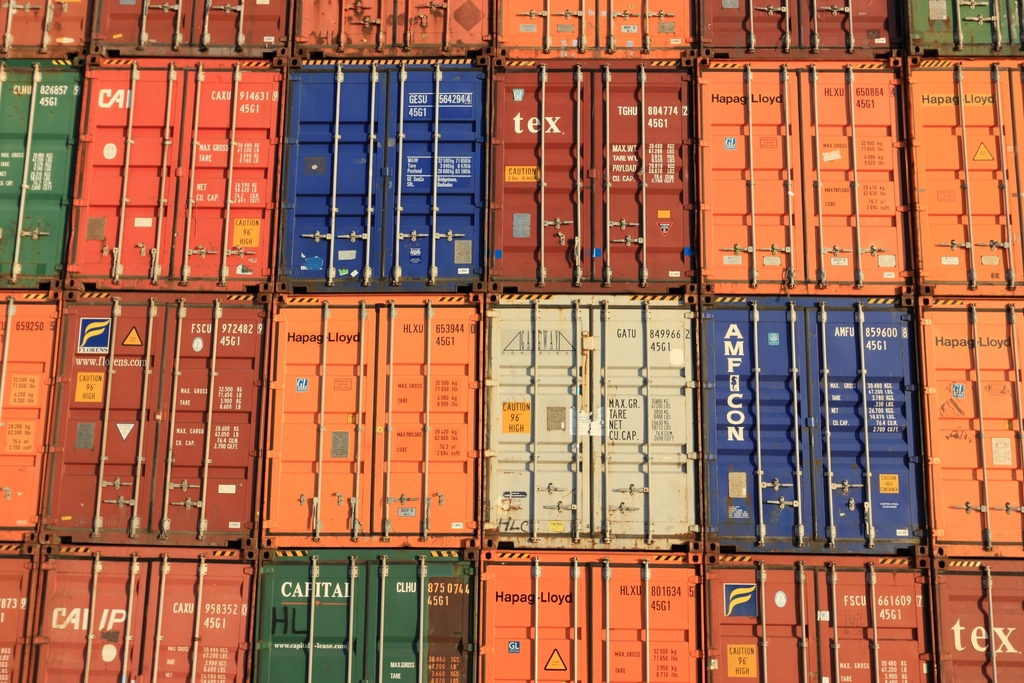
FCL (Full Container Load) means you book an entire container — most commonly a 20-foot box (about 28 CBM usable) or a 40-foot box (about 58 CBM) — for your cargo alone. You can still consolidate many suppliers into one FCL; the difference is that the whole container is yours. FCL wins on cost per CBM once you pass roughly 15 CBM, and it is faster and safer because the sealed box is not opened until it reaches you. The break-even point is the key number: below it, LCL is cheaper; above it, an FCL almost always wins even if you don't completely fill it.
The hidden math: CBM, break-even and destination charges
Calculate your total volume by adding each supplier's carton dimensions (length x width x height in meters, times the number of cartons). Then compare: an LCL quote is rate-per-CBM times total CBM, while an FCL is a flat box price. Importers often forget that LCL carries per-shipment destination charges in Saudi Arabia — handling, deconsolidation, documentation — that don't scale down with volume, which is why a 12 CBM LCL that looks cheap on paper can end up costing nearly as much as a 20-foot FCL once everything lands. Always compare the landed figure, not just the ocean-freight line.
Making multi-supplier consolidation work
- Give every supplier one delivery address — your consolidator's warehouse — and a unique mark or reference per order.
- Align delivery dates so cartons arrive within the same window; storage fees start when goods sit waiting.
- Have the consolidator inspect and photograph each supplier's cartons on arrival, so quality and quantity disputes are caught before loading.
- Standardize carton labeling (your name, PO number, carton X of Y) for clean customs and warehousing later.
- Decide LCL vs FCL only after the final CBM and weight are confirmed — not at the time of order.
A rule of thumb for Gulf importers: under about 15 CBM, lean LCL; above it, price an FCL — and always compare landed cost, not freight alone.
Consolidation only saves money when someone reliable manages the warehouse, the inspections, and the LCL-versus-FCL decision on the ground. Terrace International operates from Guangzhou and Riyadh: we receive goods from all your suppliers, inspect and consolidate them under one shipment, choose the loading method that lowers your landed cost, and handle the documentation through to Jeddah or Dammam. Send us your supplier list and let us turn it into one clean container.