Importing Irrigation Systems from China to Saudi Arabia: Drip, Sprinkler, and Fertigation
Feb 24, 2026
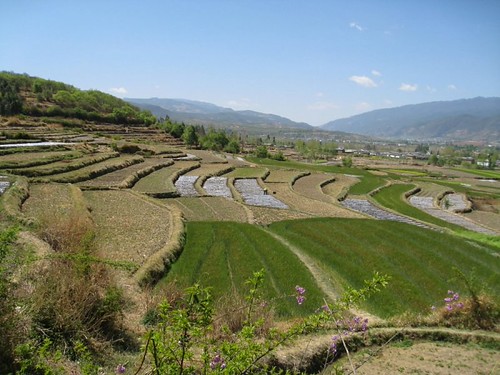
In a country where water is, from a food-security standpoint, more precious than oil, modern irrigation in Saudi Arabia is a necessity rather than a luxury. Agricultural authorities actively push the shift from flood irrigation to drip and center-pivot systems, and new farms in Qassim, Hail, Al-Jouf, and Tabuk are designed around water-efficient irrigation from day one. This creates a large and constantly renewing market: drip tape is replaced every few seasons, while filters, pumps, and fittings are consumed continuously. China today manufactures this entire ecosystem at prices that leave a healthy margin for both traders and farmers, even after freight and customs.
Why China for Irrigation Equipment
China ran the largest irrigation modernization program in history on its own soil, most visibly in the arid Xinjiang region where millions of hectares are drip-irrigated. That experience built a complete industry: high-speed drip tape extrusion lines, precision molding of pressure-compensating emitters, and pumps, filters, and fertigation systems in every size. The result is pricing dramatically below the European and Israeli-origin products that historically dominated this sector, with quality improving year after year at the serious factories.
Where Irrigation Equipment Is Made in China
- Shandong (Laiwu and Weifang): the largest cluster of drip tape and agricultural polyethylene pipe manufacturers.
- Xinjiang: large-scale factories born out of local irrigation megaprojects, with genuine arid-climate experience.
- Zhejiang (Taizhou and Ningbo): plastic fittings, valves, and sprinklers with precision molding.
- Wenling in Zhejiang and Xiamen in Fujian: submersible and surface water pumps of all capacities.
Realistic Prices and Minimum Order Quantities
- Drip tape: approximately USD 0.01-0.03 per metre depending on wall thickness and emitter spacing; MOQ is typically a half or full container.
- Pressure-compensating emitters: approximately USD 0.02-0.08 per piece at volume.
- Rotary sprinklers: approximately USD 0.5-3 depending on type and throw radius.
- Screen and disc filters: approximately USD 15-80 depending on size and flow rate.
- Pumps: from USD 40 for small units to several hundred dollars for large agricultural pumps.
Production lead time is usually 15-30 days, and sea freight to Jeddah Islamic Port or King Abdulaziz Port in Dammam takes approximately 18-30 days. Add customs duty of approximately 5% on most lines (some agricultural inputs may be exempt — verify the HS code) plus 15% VAT.
The Quality Secret: Virgin vs Recycled Plastic
This is the point on which your reputation is built or destroyed. The price gap between drip tape made from virgin polyethylene and tape made from recycled material can reach 30%, but recycled tape cracks under the Saudi sun within one season instead of three. Focus on:
- Carbon black content and UV stabilizers: request raw-material test certificates; these additives are what protect plastic from solar degradation.
- Flow uniformity (CV): ask for the coefficient-of-variation test report across emitters; good product measures under 5%, and anything above means uneven watering and uneven crops.
- Actual wall thickness: measure it yourself with a micrometer during inspection — some factories sell 0.2 mm as 0.3 mm.
- Clogging resistance: Saudi well water is rich in salts and sediment, so choose emitters with wide flow paths and filtration matched to your actual water quality.
Certificates and Regulatory Requirements
Agricultural plastic pipes, tapes, and fittings are mostly straightforward from a regulatory perspective, but pumps, control panels, and electric fertigation units are electrical products requiring SABER platform registration and SASO conformity certificates. Note carefully that Saudi power is 230/400V at 60Hz while Chinese factories default to 50Hz. A pump built to the wrong specification loses efficiency or fails early — make frequency an explicit line item on your purchase order.
Common Mistakes in Irrigation Imports
The most frequent: buying on lowest price without testing a sample at real operating pressure; mixing incompatible pipe and fitting standards (imperial vs metric); skipping spare parts and backup filter elements; and importing a full system without a proper hydraulic design, leaving the farmer with weak pressure at the ends of the lines.
Golden rule: get a sample of every item and run it on your actual well water for two weeks before confirming the container — your own water is the one test that never lies.
The Terrace International field team operating out of Guangzhou and Shenzhen visits irrigation factories in Shandong and Zhejiang, verifies technical specifications, inspects plastic quality before loading, and manages freight, SABER, and customs clearance right to your warehouse. Send us your project layout and let us secure an irrigation system that lasts seasons, not one summer.